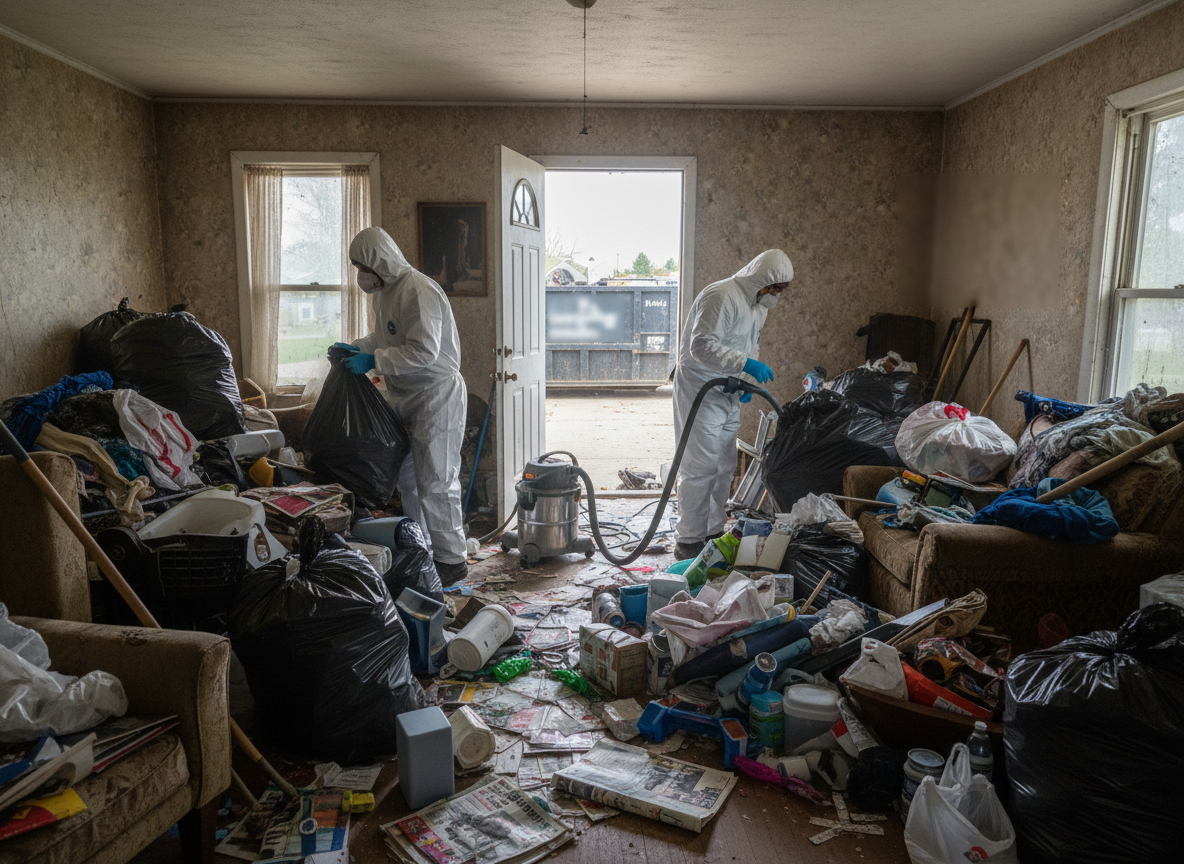
Hoarding cleanup in Bismarck often involves older single-story homes built before 1970 that sit on crawl spaces or partial basements common throughout St. Francois County. These structures trap moisture during the humid summers and allow cold air infiltration in winter, accelerating mold growth on stacked paper, fabric, and food waste. Technicians must first stabilize HVAC systems to prevent spores from spreading through ductwork that frequently runs under floors in these older builds.
Severe storms that hit the area several times each year can breach roofs or windows, introducing rainwater into already overloaded rooms. When that happens, paper and cardboard absorb water quickly and create ideal conditions for bacterial growth within days. Crews isolate affected zones with negative air machines before removing saturated materials, then treat subfloors with EPA-registered disinfectants rated for porous surfaces found in local housing stock.
Winter freezes bring another set of complications. Pipes in unheated additions or crawl spaces can burst, sending water across floors already covered in debris. The resulting ice and subsequent thaw cycles embed contaminants deeper into hardwood and carpet. Work plans account for these temperature swings by staging equipment that can operate in unheated spaces without freezing lines or damaging remaining contents during removal.
Disposal routes matter because St. Francois County landfill rules require separate handling for biohazardous or heavily contaminated loads. Every load from a Bismarck job is documented with chain-of-custody forms so the property owner receives proper records for insurance or estate purposes.
Technician insight
In Bismarck the thing that catches most people out with Hoarding Cleanup is the crawl spaces under pre-1970 homes. Once clutter blocks airflow, winter humidity from the ground plus summer heat creates perfect mold pockets that only show up after the first layer of debris comes out.
Storm-Damaged Hoard in North Bismarck
A single-story home near the railroad tracks had years of accumulated paper and clothing when a spring storm opened a roof leak. Water pooled under stacks and triggered black mold across the living room floor. Crews set containment, removed saturated material, treated the subfloor, and restored airflow so the owner could safely decide next steps for the property.
Hoarding Cleanup Services We Offer
✓Biohazard Waste Removal
Removes human and animal waste, needles, and contaminated fluids from hoarded properties while following Missouri biohazard transport rules.
✓Mold Remediation in Hoarded Homes
Treats mold colonies that form on damp paper, fabric, and wood inside properties affected by roof leaks or poor ventilation during humid summers.
✓Odor Elimination and Air Scrubbing
Neutralizes embedded smells from decay, urine, and mold using hydroxyl generators and HEPA filtration suited to older St. Francois County homes.
✓Structural Cleaning After Accumulation
Cleans subfloors, walls, and crawl spaces once clutter is removed, addressing water damage from storm-related leaks common in the region.
✓Hazardous Material Sorting and Disposal
Separates chemicals, batteries, and sharps from general debris so each category meets county landfill acceptance standards.
How it works
- 1
Initial Assessment
Technicians walk the property at 1025 Center Dr dispatch coordination to identify biohazards, structural risks, and access points created by accumulated items.
- 2
Containment Setup
Negative air machines and plastic barriers isolate work zones to keep contaminants from reaching unaffected rooms or neighboring homes.
- 3
Removal and Cleaning
Contents are sorted, biohazard items are bagged, and surfaces receive disinfectant treatment matched to the materials present.
- 4
Final Verification
Air quality and surface testing confirm the space meets safe re-entry standards before barriers come down.
Pricing
Cost depends on volume of material, presence of biohazards or mold, and number of rooms requiring containment.